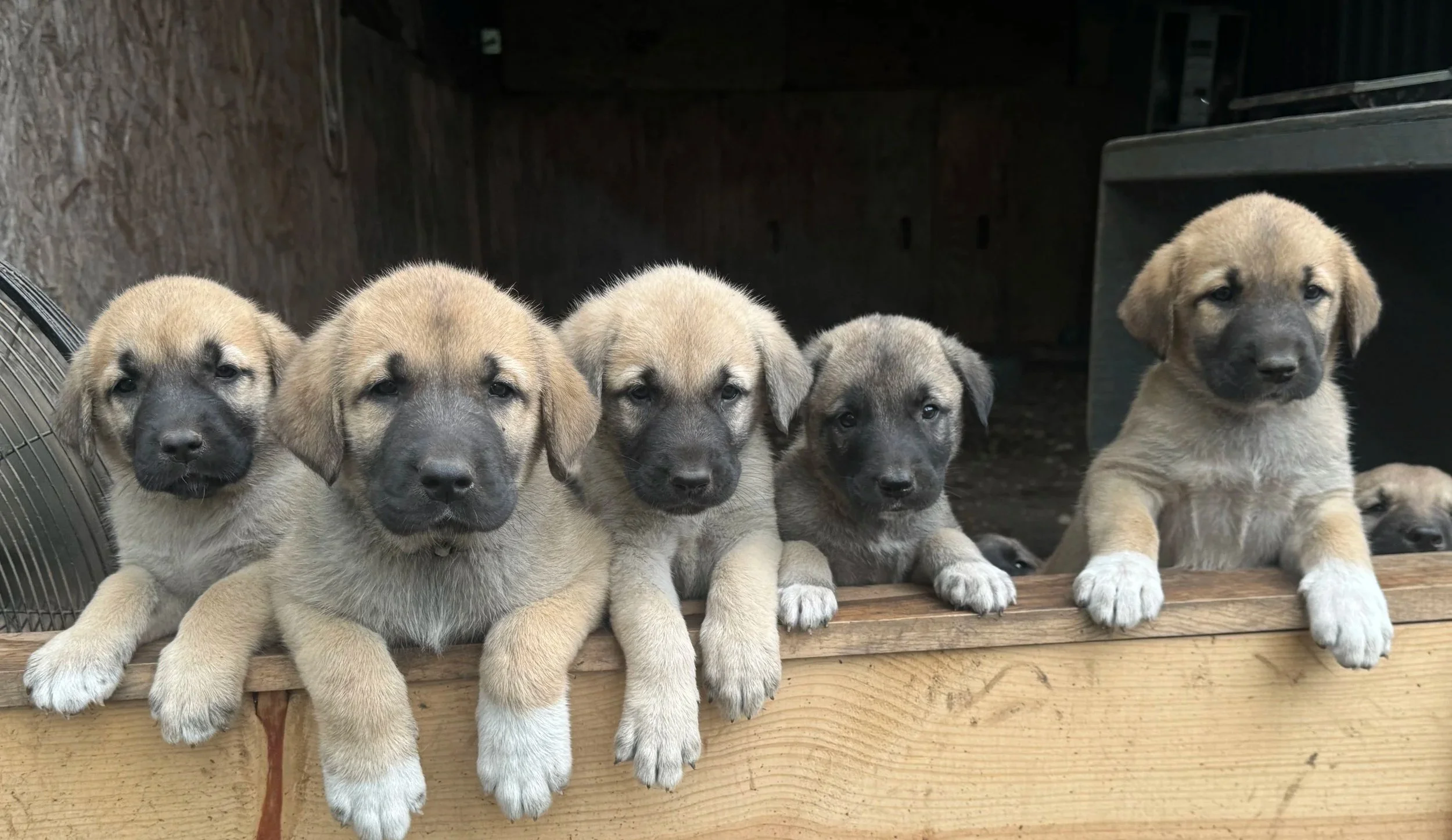
Boz Temperament
Learn about this even-tempered working dog breed. The Turkish Boz Shepherd is a giant livestock guardian and family protection dog who is great with children and other animals. Intelligent, aware, independent, loyal, devoted, and a perfect companion, this dog may be the perfect fit for you!
Turkish Boz Shepherd Temperament
The Turkish Boz Shepherd is a giant guardian dog that has retained its primitive, instinctual intelligence and innate guarding and protecting qualities as a regional landrace variant, a distinguishing trait of the breed. He is loyal, gentle, and dedicated to his family and flock. As a working guardian, he will defend his family and flock with incredible power, strength, and intelligence when he senses a true threat. It is this DEFENSE NATURE that fundamentally motivates him to PROTECT.
The Turkish Boz Shepherd retains his extremely primitive and instinctual guarding/protecting behavior; his survival and success depending upon it for centuries. Note that his scars of from fighting wolves in the Taurus Mountains to protect his flock.
An even-tempered dog, the Turkish Boz Shepherd readily accepts change and remains calm, assured, and actively observant in new environments; he is not easily startled, timid, or anxious. He is low-energy and would be content with a daily walk or a romp in the park, though he is happiest guarding an open pasture or homestead. The Turkish Boz Shepherd learns quickly, and once formally introduced to strangers or a new type of animal, he may accept the addition as part of his flock or family. While not necessarily allowing a family friend to enter the house without his family present, the Turkish Boz Shepherd may recognize and remember that this family friend is not a dangerous threat. Until alerted, he is nearly unnoticeable, quietly sitting or lying near his flock or in his favorite spot, appearing more of a giant stuffed toy than a predator or intruder control. Once the danger is identified, however, the agility and speed of the Turkish Boz Shepherd, matched by his deep bark, massive size, and power, remind owners of the effectiveness for which they were bred. In the field, predators are eliminated; on the homestead or household, unwelcome intruders must reconsider entry.
The Turkish Boz Shepherd's keen intelligence and ability to assess and appropriately react with measured response makes them extremely effective livestock guardians and family protection dogs.
The Turkish Boz Shepherd will measure the level of threat or danger before acting, always in control, sound and stable, and mindful of the appropriate level of response necessitated by the given threat. He will typically only bark if there is a valid reason and only engage if the danger is imminent. He possesses the innate ability to identify the most vulnerable in a group. He provides the greatest defense, protecting those who are most vulnerable first, often rushing to the aid of small children and young animals even before a more familiar yet stronger family member. He is able to make measured, deliberate decisions that demonstrate his keen intelligence and reasoning, a quality that must be witnessed firsthand to truly be understood and believed. He is submissive to all family members, including children, and bonds to the family as a whole rather than solely one person.
The close bond between the Turkish Boz Shepherd and his flock and family is crucial to his growth and happiness. (Dog on left is purebred Turkish Boz, dog on right is purebred Kangal)
The relationship between the owner and the dog must be positive and loving, yet consistent and predictable, for the dog to grow and develop to its full potential. His ability to reason and high level of intelligence create a dog that is both a proud and independent thinker. It requires the owner to have tremendous consistency and a soft hand when training, starting from a young age. He has a stronger need to love and be loved by his family than many other breeds. This need to bond does not manifest behaviorally as dependency or constant attention, as it can in other breeds. Rather, he needs to be an integrated family member or flock protector. His behavior will reflect the owner's: if he is ignored, he too will ignore his owner; if he is given consistent love and affection, he will return it two-fold.
A Turkish Boz Shepherd will be emotionally crushed if treated harshly, and this harsh treatment will never be forgotten and can only possibly be forgiven. He is not necessarily strong-willed, but if he is patrolling his pasture or perimeter and is interrupted by a command to come inside, he very well may decide that he needs to finish his work first rather than leave his boundaries unchecked. It is this type of behavior that makes the Turkish Boz Shepherd a fantastic livestock guardian, but it may also frustrate owners desiring their dog to play fetch and learn tricks. The dog is very capable of such things, but it is the dog who will decide whether he would like to do them. Living with a Boz Shepherd is better understood as a relationship comparable to that of living with an intelligent friend or child. They are a companion in the truest sense of the word, needing both love and respect to flourish.
Please visit the " Is the Boz Right for YOU page for a list of both positive and negative attributes of the Turkish Boz Shepherd. While he is the perfect fit for a multitude of environments and homes, like any dog or dog breed, he is by no means a perfect fit for EVERY environment and home. The Urmah Boz Shepherd Breeding program is dedicated to the appropriate and ethical placement of all Turkish Boz Shepherd guardian dogs.
The Boz Shepherd and Children
The Turkish Boz Shepherd is perfectly content as a cuddly pillow, best friend, and watchful protector for a child. The Turkish Boz Shepherd is NOT a naturally aggressive, fighting breed.
Instinctively a guardian and loving protector, the Boz Shepherd is very accepting and loving toward children, forming a lifelong bond and friendship that must be seen firsthand to be fully understood. Very tolerant of boisterous play, loud commotion, and being roughly loved by children, the Boz Shepherd makes a wonderful family pet. Along with all giant breeds, however, until the dog reaches full maturity (three to five years old), he may not know where his feet are at all times, how slobbery his kisses may be, or how big he really is. A puppy is still a puppy, even when your Boz puppy happens to be the size of a full-grown Labrador retriever at five months old. Small children and babies should always be supervised around puppies and adolescent dogs because, as much as the children are still young and learning, the dogs are, too. Giant breeds are no exception, and their giant size makes owner awareness and common sense all the more important. The Turkish Boz Shepherd is extremely sensitive and is truly devastated if accidents do occur, but forethought is always the recommended course of action.
Containment
Historically, the Turkish Boz Shepherd has traveled over 1,000 miles per year with the nomadic Turkmen and their flocks. The dogs desire to stay with their flock and family, but in the modern world, containment is necessary to prevent them from exploring beyond their property line. A 52" tall fence, made of wire, wood, vinyl, or the like, that the dog may not easily pass through, is ideal. If the dog can easily push the fence over or walk over the top of it, he will. For those owners who do not want to risk their Turkish Boz Shepherd testing the strength of their fences or have dogs lying directly against the fence line, a single electric wire running along the inside about 9" off the ground works very well. Wireless and underground containment boundary systems with battery-operated collars are also very effective, so long as the dogs are trained on them correctly, and collar batteries are checked regularly. Turkish Boz Shepherds are not known for climbing fences or digging beneath them to escape.
Owning a Boz Solely as a Family Pet
All giant guardian dogs thrive in their native environment, with their flock and family, in the grass or dirt, keeping watch and checking boundaries. Although it is not their primary historical function, many livestock guardian breeds adapt quite well to residential living if accommodations are made to satisfy their instinctual needs; the Turkish Boz Shepherd is no exception. The Boz Shepherd is adaptable and can do quite well in a residential environment if he is provided with a large backyard and daily walks or romps at the dog park for adequate exercise. He is not known to dig to escape or climb fences, but in a residential area, providing the dog with adequate space and activity to prevent boredom will further ensure this. The Turkish Boz Shepherd, however, has a booming bark and can be annoying to neighbors, as the guardian instinct may keep it on alert. The Turkish Boz Shepherd has tremendous endurance and is fantastic for hiking or as an outdoor companion; however, he may decide he is done with the adventure before you are. He needs, above all else, a close bond with his family and to be treated with love and respect. He must be a family member and interact with as a close friend and companion to develop and grow as a well-adjusted dog.
The Turkish Boz Shepherd is a giant dog, typically being counter-height at the shoulder. The dogs are able to reach most things that an adult human can, so accommodations must be made in residential areas to adjust for this. The man in this photo is 5'6" as a reference.
This may be obvious to some, but it still needs mentioning. The Turkish Boz Shepherd is a giant dog weighing as much as a full-grown adult human and standing as tall as the standard kitchen counter. He takes up a lot of physical space, so narrow hallways, cramped quarters, and entryways are completely blocked when he decides to sit or lie in these areas. Being counter-height, he can not only reach food and items left on counters and tables but also use his front legs to stand on them, then reach the tops of refrigerators and shelving. In most cases, if you can reach it, your dog can reach it, too. Owners of giant dogs must make modifications to their routines and/or decorating style to accommodate this. It is recommended to never allow your dog to jump up in excitement with his front legs as a puppy to get attention, as, when full-grown, he will easily knock over the owner, visitors, or younger children. In the picture to the right, the dog has been trained to jump up gently only on command, or, more commonly, is lifted at the shoulders into a standing position by the owner. A well-trained Turkish Boz Shepherd is a delight to have indoors, but a Boz without manners can be disastrous. For residential owners, please begin training your Turkish Boz Shepherd dog early. Boz Shepherds are very intelligent; they learn quickly, they get physically large quickly, and it is always easier to teach the desired behavior earlier than to try to un-teach an undesired behavior later.
Barking
When the Turkish Boz Shepherd barks, it is most typically for a good reason. However, his bark is very deep and will carry over great distances. Residential owners may choose to keep their dogs indoors to consider their neighbors if they are concerned about potential issues.
Drooling and Shedding
The Turkish Boz Shepherd is considered a dry-mouth dog and is not known to drool. Some can be messy drinkers occasionally; however, if they decide to plunge their entire muzzle into the water bowl to get a drink rather than lapping their water politely. Jowls and excessively droopy lips that contribute to drooling are outside the breed standard.
The Turkish Boz Shepherd is a giant, double-coated dog that sheds at least twice a year. Dogs living in more moderate climates without clear seasons will not as commonly grow as dense or thick an undercoat during the winter, so there is consequently less shedding. These dogs are giant, so the shed fur is plentiful, and due to their height, the hairs will be almost everywhere. If brushed twice a week, it is easily controlled; if brushed daily, it is minimal.
Digging and Chewing
The Turkish Boz Shepherd will do what he deems necessary if shade is not provided in summer heat.
The Turkish Boz Shepherd will seek out shade and cooler areas in the heat of the summer, wherever they may be. He prefers cool planter beds to a hotter deck, and if shade is not provided, he will dig a dugout to reach cooler soil. A dugout is usually only a few inches deep, so his belly is in direct contact with the cooler soil, but it can be as deep as the den photographed on the left. Owners can easily spare their plants, lawns, and hardscapes; however, by providing their dog a kiddie pool or trough to wade in, a shaded area out of the direct sun, and/or air-conditioning indoors during the most extreme heat. The digging behaviors are typically consistent only with high summer temperatures, as a means to cool themselves, and are not commonly seen during other seasons. Turkish Boz Shepherds are not considered "diggers" for digging holes or tunneling, as some dogs do. It must be mentioned that some outdoor landscaping plants are highly toxic and potentially lethal to dogs.
This Turkish Boz Shepherd enjoys her personal wading trough to keep cool in the extreme summer heat.
While Turkish Boz Shepherds are not typically chewers, they do enjoy their toys and possessions. With various dog toys, bones, or pig ears to provide activity and prevent boredom, the Turkish Boz Shepherd is content and non-destructive. All puppies, independent of breed, teethe; owners must have reasonable expectations that puppies must be taught which items are theirs to chew.
House Training
The Turkish Boz Shepherd is extremely intelligent and learns very quickly. With verbal correction and positive reinforcement, house training can be accomplished within a few days. For best practices, establish a routine of letting the puppy go outside after eating or drinking to urinate and defecate, for earlier success in the house-training process.
The Turkish Boz Shepherd is very intelligent and house-trains quickly. As with all puppies, consistency is key. Puppies should be fed a large breed puppy dry dog food.
Feeding
Despite their size, the Turkish Boz Shepherd does not eat as much as some may expect. The average adult male weighing 180 lbs eats an average of 6-8 cups a day, less in hot weather, eating comparatively as much as a large breed dog that weighs substantially less. The Turkish Boz Shepherd has a very efficient metabolism, and puppies do best on large-breed, slow-growth puppy food. As is true for all dogs, some foods are highly toxic and potentially lethal.
Interacting with Other Dogs and Family Friends
The Turkish Boz Shepherd views his property as his territory and home instinctively. He will naturally feel compelled to guard his territory, and the level of protection he provides will be determined by how the owner trains him to accept new people and changes within his territory. Formally introduced visitors are readily accepted by the Turkish Boz Shepherd, whereas unfamiliar strangers are viewed with suspicion and denied entry without reassurance from their owner.
When properly socialized, the Turkish Boz Shepherd readily accepts change and enjoys interaction with others, human and animal alike.
Some Boz Shepherd owners prefer that their dog not allow people outside the immediate family into the home without formal introduction, whereas other owners would prefer their dog to be more accepting of family friends who visit regularly. The Boz's response and tolerance toward accepting persons outside the immediate family will be guided by the owner's consistent training from the time he is brought home. Most importantly, the Turkish Boz Shepherd is an intelligent, perceptive dog that learns the owner's expectations and adapts accordingly.
Outside the Turkish Boz Shepherd's territory, he behaves differently toward strangers and other dogs. If socialized from a young age, he is aware that outside his territory, he is "off duty" and is not overly dog-aggressive, and is much more accepting of strangers, often allowing them to pet him and love on him in ways that wouldn't be imagined at home without introduction. He will often reflect his owner's comfort level, being very perceptive and accepting most new situations with ease, as long as the owner is also calm and assured. A nervous handler will create nervousness in the dog; he will sense the handler’s unease, and his instinctual protectiveness will dominate.
IN RESPONSE TO CIRCULATING MISINFORMATION THAT INACCURATELY LABELS ALL TURKISH BOZ SHEPHERD AS A HIGHLY AGGRESSIVE, FIGHTING DOG:
ALL of the Turkish Boz Shepherd dogs in the Urmah Breeding Program are family and working-oriented dogs only; we do not tolerate any persons or dogs with fighting intentions, engagement, or mentality.
Fundamentally, Turkish Boz Shepherds do not exhibit the fighting mindset or behaviors associated with dogfighting; if they did, they would be worthless as the working, effective guardians. However, I am aware of a breeder who intentionally imported dog-fighting genetics into their breeding program as recently as 2025. Be cautious about who you purchase from and ask questions before you buy.
Any potential buyer or skeptic of the breed is encouraged to contact Jesika VanFossen to discuss the possibility of meeting and interacting with Turkish Boz Shepherds personally; only personal interaction will ultimately provide legitimacy to claims, both positive and negative.
For further information please get in touch with Jesika VanFossen at jeskarmel@gmail.com, call or text 785-640-9199