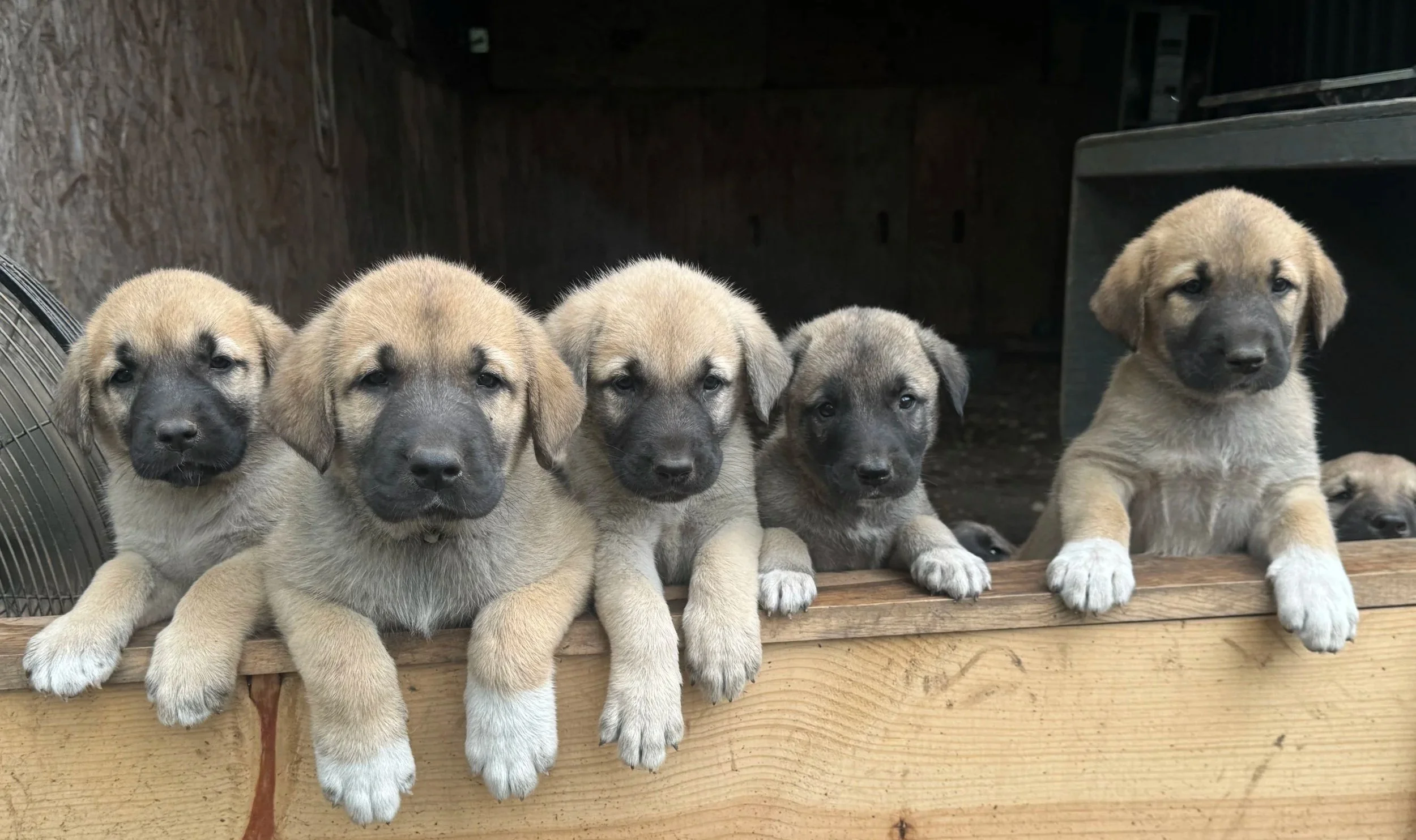
What makes a "Boz" a Boz
The Turkish Boz Shepherd is its own breed, separate from the Kangal, Anatolian Shepherd, Akbash, and other Coban Kopegi landrace breeds. Visit this page and learn what makes the Boz Shepherd the best choice for a variety of situations and environments!
What Makes a "Boz" a Boz
All dogs on earth are interrelated at a fundamental level; certain breeds naturally share more genetic material than others, which explains why some breeds may resemble others more closely. Most Shepherd dogs originating from Turkey and the surrounding areas share a broad genetic base of the çoban köpeği landrace, which includes the Yörük regional variants of the Akbash and Turkish Boz Shepherd, as well as the Kars, Kangal, and Anadolu. While these Shepherds share many traits, each landrace variant has been specialized by its people, and differences in size, coat, build, strength, structure, and agility exist to the extent that they are considered separate breeds.
Turkish Boz Shepherd at a dog show.
As explained on the Breed History page, the Turkish Boz Shepherd is a dog that has developed over time as a regional variant of the çoban köpeği landrace and is in no way a new dog or a mix of any other modern or aggressive fighting breeds. Anyone claiming this is urged to visit the Breed History page to better educate themselves.
Each of these landrace breeds is recognized by organizations worldwide. I want to highlight some key differences between the Turkish Boz Shepherd and the Kangal, as these two regional variants are often confused and are closely related yet distinct breeds. Additionally, the Turkish Boz Shepherd is not considered a Malak dog and differs greatly in build, temperament, and function as described below.
Turkish Boz shepherd comfortable working with a cow.
The following list is an EDUCATIONAL TOOL ONLY and provides the information for the general public. If anyone has constructive input to help educate the public about this list, please get in touch with me so we can work together professionally on this.
CHARACTERISTIC DIFFERENCES BETWEEN THE TURKISH BOZ SHEPHERD AND THE KANGAL:
TYPICAL PHYSICAL DIFFERENCES:
The Turkish Boz Shepherd is typically larger than a Kangal.
Turkish Boz males averaging 32 - 40+ inches at the withers and 140 - 250 pounds, Turkish Boz bitches average 29 - 35 inches at the withers and 100 - 170 pounds.
Kangal males average 28-32 inches and 90-145 pounds; Kangal females average 26-29 inches and 80 -120 pounds.
Turkish Boz Shepherds typically have a heavier bone structure and appear more substantial than the average Kangal. Kangal bones are typically more elliptical, whereas Turkish Boz Shepherd bones are round.
The Turkish Boz Shepherd profile is much more square than a Kangal, being almost as tall as it is long. Kangals typically have a more rectangular profile, similar to other shepherd breeds.
Proportionately, the Turkish Boz Shepherd has larger feet for its frame than the Kangal, with more webbing between the toes.
The Boz skull is more blocky and square, with a narrower muzzle, while some compare it to the look of a "racehorse", whereas the Kangal skull is typically more rounded, with a softer fox-like appearance.
The Kangal tail typically has more overall curl than a Boz tail
Here, the differences between the Malaki, Turtkish Boz (Guregh), Kangal bone structure and overall appearance are quite evident. While they share similarities, each is distinct and unique to its breed.
TYPICAL BEHAVIORAL AND TEMPERAMENT DIFFERENCES
Kangals are typically higher-energy than Turkish Boz Shepherd dogs.
Turkish Boz Shepherds are typically calmer and have a higher overall tolerance and threshold than a Kangal. This is NOT to say that Kangals are easily agitated or anxious. Still, there is a consistently observed temperament difference between the breeds, as reported by those who own both breeds concurrently.
The livestock guardian abilities of the Boz are innately ingrained in both their acceptance and protection of livestock. With their increased size and strength, the Turkish Boz Shepherd provides not only a more intimidating sense of risk from the predator's perspective but also is more able to contend with a physical encounter if forced to do so. Owners who have both breeds and can compare them in the same environment have consistently stated that they prefer their Boz Shepherds as instinctual livestock guardians over their Kangals.
Here, the differences in skull structure and appearance between the Malaki, (Guregh) Turkish Boz Shepherd, and Turkish Kangal are quite evident.
CHARACTERISTIC DIFFERENCES BETWEEN THE TURKISH BOZ SHEPHERD AND THE MALAK (ALSO CALLED MALAKLI):
The Turkish Boz Shepherd's skeletal and muscular structure is built for athleticism and agility, unlike that of the Malakli.
The Turkish Boz Shepherd has sighthound genetic influences, whereas the Malakli does not.
The Malakli typically has an extremely heavy to excessive bone structure and skull with a strong stop. The Turkish Boz Shepherd's skull lacks a pronounced stop, and its skull is noticeably narrower, with a narrower muzzle.
The Turkish Boz Shepherd has a square profile, rather than the rectangular profile of the Malak.
The Turkish Boz Shepherd has a much faster speed and reaction time than the Malak.
Typically, the Malakli is described temperamentally as harsh and stubborn, being a one-owner dog, and is substantially more dog-aggressive than the Turkish Boz Shepherd, who is fully submissive to all family members and not overly dog-aggressive.
The Turkish Boz Shepherd is heavy-boned, but not excessively so, with a square profile and no pronounced stop as is seen in the Malak.
The Malakli structure is extremely heavy-boned and profile is rectangular. The skull is wide and stop is very pronounced.
For further questions, please get in touch with Jesika VanFossen at 785-640-9199 or email HERE